How to Get a Job at Top Tech Companies and Unicorns
Top tech companies and unicorns both get flooded with applications, and they shortlist very differently. Here's what recruiters quietly weigh before they reply — and the specific approach that actually works for each.
Two Very Different Doors
When people talk about "landing a job at a top tech company or a unicorn," they usually picture one process: find a role, apply, wait. In reality these are two different doors, and they open in different ways.
Big, well-known tech companies — think Google, Microsoft, Amazon, Uber — receive an enormous number of applications for every role, so they lean on filters, structured screening, and referrals to sort the pile. Unicorns (high-growth, well-funded startups) move faster and more personally, so who you talk to matters more than which button you click.
Before we get to each door, it helps to know what recruiters quietly weigh when they decide whether to shortlist you at all. Some of these you can change; some you can't. Knowing them saves you from guessing why you never heard back.
What Recruiters Quietly Check Before Shortlisting You
None of these are absolute rules, and there are always exceptions. But across most competitive roles, these are the factors that tend to move an application forward or set it aside:
- Location and work authorization. If the job is in one country and you're applying from another, the odds of rejection go up — often because the company would need to sponsor a visa. Most companies won't take that on unless they're convinced you're worth it, usually through rare or highly relevant experience. That said, there's no harm in applying; people do get picked up when the fit is strong enough.
- Years of experience in the domain. Depth in the specific area the role covers matters a lot. Relevant, hands-on years in that domain carry more weight than a long resume that's spread thin across unrelated things.
- Stability and average tenure. Recruiters glance at how long you tend to stay. Around two or more years per company generally reads as steady. A string of short stints can raise questions you'll have to answer later, so it's worth being ready to explain them.
- The brand value of your current and past employers. This one feels unfair, but it's real: if you've worked at companies the recruiter recognizes, you're more likely to get shortlisted. Between two candidates with similar experience, a recruiter often feels more confident picking the one from a known name. You can't rewrite your history — but you can make your actual impact impossible to miss.
- Service-based vs. product experience. If your background is entirely service-based, that usually matters less than people fear. Unless the job description names it as a hard requirement, recruiters are looking for the skills to do the work — not the label on your past employer. Show the skills clearly and this stops being a barrier.
- Notice period. People who can start soon are often preferred. If you can join within a month, say so — a short or immediate notice period is a genuine advantage when a team needs the seat filled.
You can't control all of these. What you can control is how clearly your resume proves your skills and impact — which is exactly what gets you past the brand and experience filters.
Getting Into a Unicorn: Go Straight to a Person
Hiring at unicorns is mostly relationship-driven. The fastest path is usually not the application form — it's reaching a real person and asking directly.
- Message the recruiter or hiring manager on LinkedIn. For an engineering role, that's often the engineering manager; for other roles, the recruiter or the team's manager. Ask plainly whether they're hiring for the kind of role you're looking for. A direct, specific message gets a far better response than a cold application.
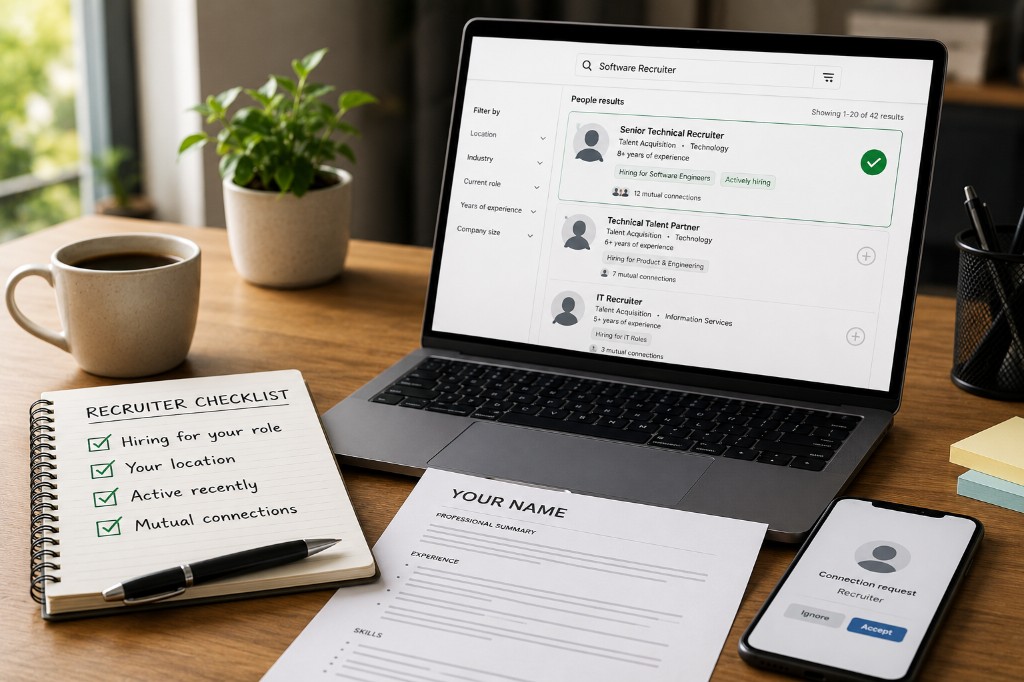
- Find the right person first. Messaging just anyone rarely works — you want the person who actually hires for your function. Our guide on finding the right recruiter on LinkedIn walks through exactly how to do that.
- Write a message they'll actually answer. Once you've found them, keep it short and human. Here's how to message a recruiter on LinkedIn so they actually reply.
At a unicorn, a good message to the right person can start the whole process — sometimes before a role is ever posted.
Getting Into Top Tech: The Hardest Door
Getting into big, established tech companies is the toughest of the two, mostly because of the sheer volume they filter through. Here's what actually helps, in rough order:
- A resume that survives the first filter. Referrals get talked about as a magic key, but plenty of referrals go nowhere if the resume doesn't impress the recruiter or make it through the applicant tracking system (ATS). Before anything else, tighten your resume: make your impact concrete with resume bullets that prove impact, and keep it lean using what to keep on a one-page resume.
- A referral from someone who can vouch for you. A referral helps most when the person genuinely knows your work and can speak to it — that vouch gives your application a real push. A referral from someone who barely knows you does much less.
- Reach the hiring manager when you have a genuine match. If you know which product or team the role sits on, and you've done similar work before, a direct, specific note to the hiring manager on LinkedIn can complement your application. Lead with the overlap between what they're building and what you've already done.
- The careers page is the last resort, not the first. Applying cold through the site is worth doing, but treat it as the backup — after your resume is sharp and you've tried a warmer route.
Checklist: Before You Apply
Run through this before you spend energy on any single role:
- Does the job's location match where you can legally work — or do you have experience strong enough to justify sponsorship?
- Does your experience clearly match the domain the role is in?
- Can you explain your tenure and any short stints without fumbling?
- Does your resume prove impact and pass a quick ATS-style read?
- For a unicorn: have you found the right recruiter or hiring manager and sent a direct, specific message?
- For top tech: do you have a referral from someone who can actually vouch for you?
- Can you state a short or immediate notice period?
The Bottom Line
There's no single trick to getting hired at a top tech company or a unicorn, but the two doors do open differently. At a unicorn, go straight to a person: find the right recruiter or hiring manager and ask directly. At a big tech company, win the filter first — a sharp, ATS-ready resume and a referral from someone who can vouch for you beat a cold application every time. And a few things quietly shape every decision: location, relevant experience, steady tenure, and how soon you can start. You can't control all of them, but you can make your skills and impact impossible to overlook — and that's what gets you through the door.